Ancient God of Egypt Redwork: Design Review for Business
When I first opened the Ancient God of Egypt Redwork embroidery file, I immediately recognized its potential for small business merchandise. As someone who reviews machine embroidery designs daily for commercial use, I look for clarity, stitch integrity, and brand adaptability. This design delivers a strong, handcrafted presence that feels both ancient and modern. It is not a playful or overly decorative motif. It carries a quiet authority, making it ideal for businesses that want to communicate heritage, craftsmanship, or a bold visual identity.
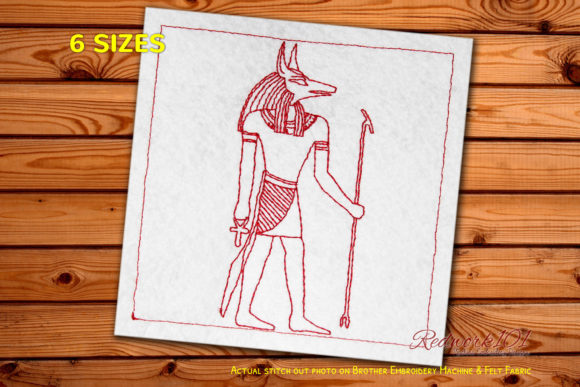
The Ancient God of Egypt Redwork design presents a crisp, linear aesthetic typical of redwork embroidery. The line art is clean, and the optional Box Stitch adds a framing element that can either contain the design or be omitted entirely. The description notes that the box color often differs from the main design, and you can skip that color altogether. This flexibility is a huge advantage for small business owners who need to match brand colors exactly. The Embroidery category here is straightforward, but the design's real strength lies in its adaptability across apparel and accessories.
First Impressions and Visual Personality
The Ancient God of Egypt Redwork design feels professional, bold, and slightly rustic. It is not delicate or overly ornate. The linework suggests a confident hand, and the redwork style gives it a timeless, almost vintage quality. For a small business, this translates into a mark that feels handmade without being sloppy. It communicates durability and tradition, which works well for brands centered on natural products, artisanal goods, or cultural themes.
I would describe the visual personality as earthy and authoritative. It is not a friendly cartoon or a playful logo. It is a statement piece. A café with an Egyptian or North African theme could use this as a chest logo on aprons. A boutique selling handmade ceramics or textiles could apply it to tote bags. A creative studio focused on historical or mythological art could feature it on caps and work shirts. The Africa category placement is appropriate, but the design also transcends geographic boundaries when used as a symbol of strength or heritage.
Real Business Use: Where This Design Shines
In my experience, Ancient God of Egypt Redwork performs best on medium to large surfaces where the line details can breathe. Here are the applications I recommend for small business merch:
- Embroidered patches – The design works beautifully as a standalone patch. The optional Box Stitch can serve as a border, giving the patch a finished, professional edge. For patch production, test the design at 3 to 4 inches wide to ensure the facial features and hieroglyphic-style details remain legible.
- Apron embroidery – For a café or bakery, center the design on the chest or upper left pocket. The redwork style holds up well on cotton and linen aprons, and the single-color thread simplifies production.
- Cap embroidery – This is a more challenging surface. The curved front of a cap can distort the design if it is too wide. I recommend reducing the design to 2.5 inches wide and testing the placement on a curved hoop. The line density is moderate, so it should sew cleanly on structured caps.
- Tote bag design – Tote bags are forgiving surfaces. The Ancient God of Egypt Redwork design appears prominently on canvas or cotton totes. It adds perceived value to a handmade product, making the bag feel like a premium giveaway or retail item.
- Staff uniforms and work shirts – For a florist, pet brand, or handmade shop, this design on a left chest position creates a cohesive brand identity. The single-color format keeps production costs low, and the design is easy to repeat across multiple garments.
- Event merchandise and customer gifts – If you are creating limited-edition merch for a cultural event or product launch, this design offers a memorable visual. It works well on koozies, small pouches, or even as a label accent on product packaging.
For Etsy sellers and digital embroidery file buyers, this design is a strong addition to your library. It is distinct enough to stand out in a crowded marketplace, yet versatile enough to be adapted for different clients. I recommend creating a printable mockup of the design on a tote bag or apron to show potential buyers the finished product.
Where to Use Carefully: Size, Surface, and Fabric Considerations
No design is perfect for every application. Ancient God of Egypt Redwork has specific limitations that small business owners should understand before production.
- Small patch sizes – Below 2 inches, the finer lines in the design may lose definition. The eyes, mouth, and headdress details can become muddled. I advise keeping the design at least 2.5 inches tall for any patch or apparel application. If you need a smaller version, consider simplifying the design or increasing the line thickness in your embroidery software.
- Cap fronts and curved surfaces – As noted, caps require careful hoop placement. The design's linear nature means any distortion is immediately visible. Use a curved cap hoop and test on a sample cap before committing to an order. Also, skip the outer Box Stitch on caps to reduce bulk and allow the design to follow the curve naturally.
- Tiny lettering or fine details – The design does not contain small text, but the intricate linework in the headdress and facial features can be problematic on rough fabrics. Avoid high-texture fabrics like fleece, heavy knits, or thick canvas. These fabrics absorb thread and blur the lines. Stick to smooth cotton, linen, poly-cotton blends, or denim for best results.
- High stitch density – The Ancient God of Egypt Redwork design uses moderate stitch density, but the optional Box Stitch can add significant density. If you include the box, be aware that dense stitching can cause puckering on lightweight fabrics. Use a cutaway stabilizer for knits and a tear-away stabilizer for wovens. Always test on your target fabric.
- Dark uniforms – This is a redwork design, so the thread color is typically red. On dark fabrics, red thread may not pop unless it is a bright or saturated shade. If your brand colors include dark navy or black, consider using a lighter thread color or a metallic red for contrast. Test the contrast in a mockup before stitching.
- Items requiring frequent washing – Aprons, tote bags, and staff uniforms endure repeated washing. The design's line density is stable, but I recommend using a high-quality polyester thread to prevent fading. Also, advise clients to wash embroidered items inside out and avoid bleach.
Brand Identity and Customer Trust
In the small business world, every design element contributes to brand identity. The Ancient God of Egypt Redwork design evokes a sense of history, strength, and artistry. For a business that wants to position itself as rooted in tradition or cultural appreciation, this design is a natural fit. It signals to customers that the brand values craftsmanship and meaning over fleeting trends.
Customer trust is built through consistency and quality. When you use a cohesive design across your merchandise, uniforms, and packaging, you create a unified brand experience. This design's single-color format makes it easy to maintain that consistency. You can use the same embroidery file on aprons, caps, and tote bags without worrying about color mismatches or thread changes. That simplicity reduces production errors and reinforces your brand's visual identity.
For handmade product businesses, the design adds a layer of professionalism. A tote bag with a well-stitched Ancient God of Egypt Redwork motif feels more valuable than a plain bag. It becomes a keepsake, not just a giveaway. Customers are more likely to use and display branded merchandise that looks intentional and high-quality. That visibility translates into word-of-mouth marketing and repeat engagement.
However, be mindful of cultural sensitivity. The design references ancient Egyptian iconography. If you are using it for a brand that does not have a direct connection to that heritage, consider how it will be perceived. Use it respectfully, and avoid trivializing the imagery. When done well, it can enhance your brand's story. When done carelessly, it can alienate informed customers.
Practical Embroidery Designer Notes
Before you send this design to production, here are the steps I always take with a new file:
- Test it in black and white first. I run a black-and-white printout of the design at the intended stitch size to check line clarity and spacing. This helps me identify areas that might become muddy at small sizes.
- Check if it works at small patch size. I reduce the design to 2 inches and review the details. If the eyes or headdress elements lose shape, I adjust the design or recommend a larger minimum size to the client.
- Review thread color contrast. I place the design mockup against the actual fabric color. Red on navy, black, or olive can be low contrast. I may suggest a thread color shift to ensure the design pops.
- Inspect spacing and density. I look at the stitch map to ensure there are no large gaps or overly dense areas. The optional Box Stitch should be evaluated separately. If the box uses a different color, I confirm that the thread change is feasible within the production workflow.
- Confirm hoop size. This design likely fits a standard 4x4 or 5x7 hoop at most sizes, but I always verify. For larger patch applications, a 6x10 hoop may be needed. Confirm this before quoting a client.
- Test on real fabric. I run a sample stitch on the exact fabric I will use for the final product. This catches any tension issues, thread breaks, or distortion problems.
- Use proper stabilizer. For this design, a medium-weight cutaway stabilizer works well for most fabrics. For dense stitching, a double layer may be necessary. Avoid using only tear-away on knits, as the design can distort.
- Create a mockup for client approval. I take a photo of the stitched sample on a garment or bag and send it to the client. This builds trust and reduces the chance of rework.
- Compare it beside other design assets. If the brand uses other logos or embroidery files, I place them side by side to ensure visual harmony. The design should complement, not compete with, existing brand elements.
- Confirm commercial licensing before business use. The product description does not specify license terms, so I advise every buyer to check the usage rights. If you are selling embroidered products with this design, ensure you have a commercial license. If you are a digital embroidery file buyer, confirm that your license covers resale of finished items.
Final Verdict for Small Business Owners
Ancient God of Egypt Redwork is a strong, versatile embroidery design that fits well into a small business merchandise strategy. It is not a generic floral or a trendy slogan. It is a design with character, and that character can elevate your brand identity when used thoughtfully. The redwork style keeps production simple, while the optional Box Stitch allows for customization.
I recommend this design for businesses that want to communicate strength, tradition, and craftsmanship. It works on aprons, tote bags, patches, and caps, provided you respect the size and fabric limitations. Test it thoroughly, use proper stabilizer, and confirm your licensing. With those steps in place, Ancient God of Egypt Redwork can become a reliable asset in your custom apparel and branded merchandise lineup.