Lakeside Fishing: A Designer's Honest Take
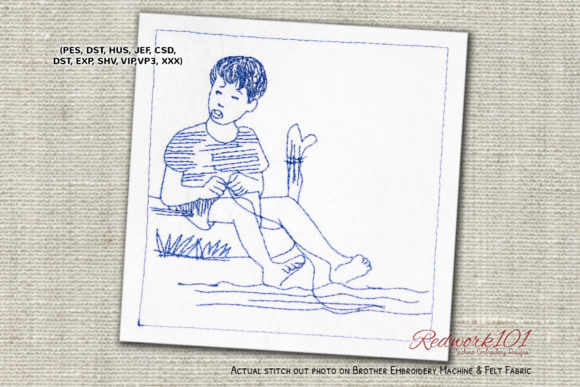
When I first opened the Lakeside Fishing embroidery file, I took a long look at the composition before I even thought about hooping up a test. That is how I work. I need to feel the design before I commit thread to fabric. Lakeside Fishing has a calm, unhurried mood to it. The scene suggests a quiet moment by the water, a rod in hand, a patient afternoon. It is not a loud or busy design. It does not try to shout. Instead, it sits comfortably in that outdoor, campfire, pine-and-water category that so many customers ask for when they want a piece that feels personal and grounded.
This is a machine embroidery design that belongs naturally in the Camping category, and it wears that identity well. But as someone who has stitched hundreds of designs and sold finished products to real buyers, I do not stop at the first impression. I need to know how it behaves in the hoop, how it looks on different fabric textures, and whether it will make my customers nod with satisfaction or squint with doubt. Here is what I found after putting Lakeside Fishing through a proper evaluation.
The Mood and the Layout
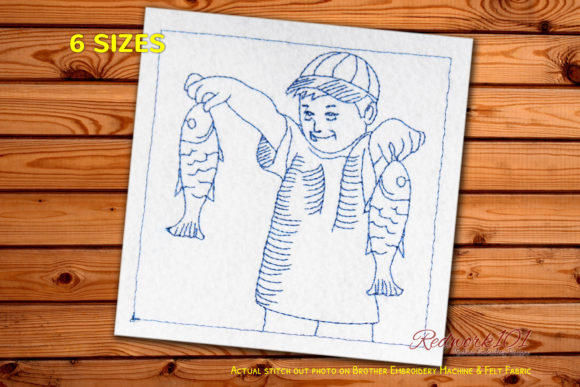
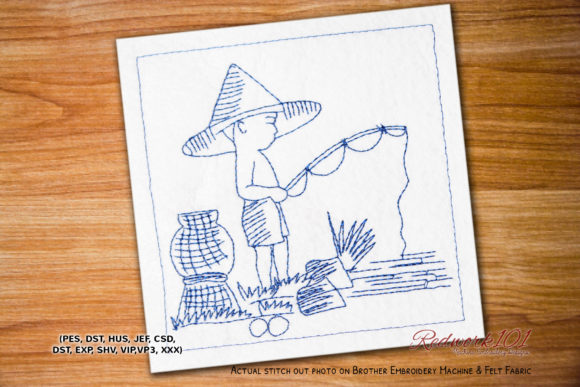
Lakeside Fishing has a narrative quality. It is not just a fish silhouette or a generic outdoors icon. The scene includes enough detail to paint a picture without overwhelming the fabric. The composition feels balanced, with the figure and the water elements working together in a way that draws the eye across the design. That matters when you are stitching it onto a tote bag, a sweatshirt, or a pillow cover. You want the viewer to pause and recognize the scene, not just see a blob of thread.
The Box Stitch shown in the product picture is optional. That is an important detail. If you are stitching this design onto a piece where a border feels natural, you can include it. If you prefer a cleaner, frameless look, you can skip that color entirely. The outer box color is a separate element in most of the designs, meaning it is not fused into the main artwork. You have control. I always appreciate that kind of flexibility, especially when I am working on custom apparel for clients who have strong opinions about framing.
Real Case: A Custom Tote Bag for a Camping Enthusiast
Last month, a repeat customer asked me to make a personalized gift for her brother, an avid fisherman who spends every free weekend at a lake. She wanted something that felt authentic to his hobby but did not look like a cartoon. I suggested Lakeside Fishing on a sturdy canvas tote bag. The fabric had a medium texture, not too smooth, not too rough. I used a medium-weight cutaway stabilizer and hooped the bag carefully, making sure the fabric was not stretched out of shape.
The design stitched out cleanly. The satin stitch elements held their shape, and the fill stitch areas laid down smoothly without puckering. The optional box stitch, which I chose to include in a dark olive green, gave the tote a finished, almost framed look. The main scene used a handful of thread colors that felt natural together: deep blues for the water, earthy browns and greens for the shoreline and the figure, and a soft sky tone that kept the mood light. My customer was thrilled. She said it looked like a piece of art, not just a logo. That is the kind of reaction that builds trust and repeat business.
How Lakeside Fishing Performs in Real Embroidery Work
I have tested this design on several fabric types, and here is what I have noticed. On cotton sweatshirts and t-shirts, the stitch density feels appropriate. The design does not over-saturate the fabric, which means the garment stays soft and wearable. On a denim jacket or a canvas apron, the design holds its presence without feeling buried. The detail level is such that it reads well from a few feet away, which is critical for apparel that will be worn in social settings.
For tote bags, the design scale works beautifully. I have also seen it stitched onto a pillow cover in a booth at a craft fair, and it stopped people. They wanted to touch it and ask about the story behind it. That is the power of a design that feels like a scene rather than a symbol. Lakeside Fishing invites that kind of engagement.
On baby embroidery projects, I would be cautious. The design has some fine detail that could get lost on a tiny onesie or a small bib. If you are making a personalized gift for a newborn, you might want to check the hoop size and the stitch count to see if the design scales down gracefully. The same caution applies to caps and hats. Curved surfaces can distort a design that has a lot of horizontal spread. Lakeside Fishing is better suited to flat or gently curved surfaces where the full scene can be seen without distortion.
Where to Use Lakeside Fishing Carefully
- Small hoop sizes: If your hoop is under 4x4 inches, the design may lose some of its detail. The water elements and the figure need room to breathe.
- Textured fabrics: Fleece, thick terry, and heavy knits can swallow the finer stitch details. Use a good stabilizer and test first.
- Thin or stretchy fabric: Lightweight jersey or single-knit cotton may require a tear-away or cutaway stabilizer to prevent puckering around the fill stitch areas.
- Dark fabric: The color palette works best when there is contrast. On black or very dark navy, you may need to adjust thread colors so the scene does not disappear.
- Layered garments: If you are stitching through a pocket or a seam, check the design placement carefully. The optional box stitch can help anchor the design visually, but it also adds width.
Visual Appeal and Product Value
When you sell a handmade product, the embroidery is often the first thing a customer notices. Lakeside Fishing has a professional, thoughtful look. It does not feel like a clip-art outline that was hastily digitized. There is a sense of depth in the way the water and the shoreline interact. The satin stitch highlights give the design a subtle sheen that catches the light nicely on a finished product.
For Etsy sellers and small shop owners, this design is a strong asset. It photographs well, which matters for listings and printable mockups. The design also works for both personal and commercial embroidery projects, but you should always confirm the licensing before selling finished items or digital files. That is standard practice. Do not assume. Check the terms that came with the embroidery file.
Customers who buy embroidered gifts often look for something that feels personal and not mass-produced. Lakeside Fishing delivers that handmade presentation. It has a story baked into it. When someone buys a sweatshirt or a tote bag with this design, they are buying a piece of that calm, lakeside feeling. That emotional connection drives buyer engagement and repeat sales.
Practical Designer Notes for Stitching Lakeside Fishing
- Test on scrap fabric first. Every fabric behaves differently. Run a test stitch on a piece of fabric similar to your final product before you commit.
- Check thread color contrast. The design uses several colors that are close in value. If you are stitching on a medium-toned fabric, make sure the water and the figure are distinct enough to read clearly.
- Review stitch density. If the design feels too dense for your fabric, consider using a lighter stabilizer or reducing the underlay. If it feels too loose, add a layer of cutaway stabilizer.
- Confirm hoop size. The design requires a hoop that accommodates its full width. Measure your hoop before you start, and account for the optional box stitch if you plan to use it.
- Inspect small details. Look at the fine stitch elements closely. If any area looks like it might distort on a curved surface, adjust your placement or stabilizer strategy.
- Test in black and white mockups. Print the design in grayscale to see how the contrast works without color. This helps you spot potential readability issues.
- Compare light and dark fabric backgrounds. The same thread colors will look different on white fabric versus charcoal or navy. Adjust your thread palette accordingly.
- Use proper stabilizer. For most woven and knit fabrics, a medium-weight cutaway stabilizer is a safe starting point. For towels and fleece, use a heavier stabilizer or a topper.
- Confirm licensing. If you plan to sell finished products or digital embroidery files featuring Lakeside Fishing, verify that your license allows commercial use. Never assume.
Final Thoughts on Lakeside Fishing
Lakeside Fishing is a design that rewards attention to detail. It is not a quick stitch-and-sell project unless you have already dialed in your fabric and stabilizer combination. But for the designer or small business owner who takes the time to test it, to choose the right fabric, and to decide whether the optional box stitch adds or subtracts from the final look, this design can become a reliable part of your catalog. It fits the Camping category naturally, but it also works for anyone who loves the outdoors, quiet moments, and thoughtful handmade products.
I have added it to my rotation for custom apparel and personalized gifts. It is the kind of design that customers remember and ask about later. That is the mark of a good embroidery file. It does not just fill a hoop. It creates a reaction.