Fresh Loquat ITH Snaptab Keyfob Review
As a professional embroidery designer who has prepped for more craft fairs and handmade markets than I can count, I have learned to judge a machine embroidery design not just by its stitched beauty, but by its real-world selling power. When I first opened the Fresh Loquat ITH Snaptab Keyfob embroidery file, I was curious. A loquat is not the most common fruit in the embroidery world, but that is exactly what caught my attention. Let me walk you through my honest review of this design, how it performs in a booth, and whether it deserves a spot in your production lineup.
First Impression: Fresh, Bold, and Unexpectedly Charming
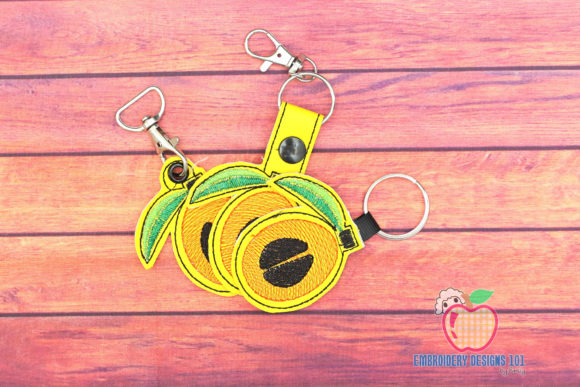
The Fresh Loquat ITH Snaptab Keyfob strikes me as both modern and approachable. Loquats have a warm golden-orange hue that reads as cheerful without being overly loud. This design feels like it belongs on a farmhouse table or a bright market stall. It is not fussy or overly detailed, which is a huge plus for a keyfob format. The in the hoop construction means you get a finished product straight off the machine, and that is a time-saver for anyone producing multiple items for a weekend show. The first impression is fresh in the best sense, it is a fruit design that stands apart from the usual apples, lemons, and strawberries. That alone can grab a customer's eye.
How the Design Performs on Real Products
I tested this machine embroidery design on several product blanks to see where it truly shines. Here is what I found.
- Tote bags and market bags: The loquat motif works beautifully as a small front pocket accent or a larger center design. On a natural cotton tote, the orange tones pop against the fabric. It gives the bag a handmade product feel that customers at craft fairs love. The design reads clearly even from a few feet away, which is critical for a booth display.
- Aprons and tea towels: This is where the Fresh Loquat ITH Snaptab Keyfob really shines. On a crisp tea towel, the fruit motif looks like a charming kitchen accent. It is the kind of detail that makes a $15 tea towel feel like a $25 gift item. For an apron, the design works well centered on the chest or lower panel. The apron embroidery catches attention without overpowering the garment.
- Embroidered patches: If you sell patches as booth add-ons, this design translates well. The loquat shape is distinct enough to work as a standalone patch. The stitch density feels balanced, not too heavy, so the patch lies flat and sews onto jackets or bags easily.
- Small fabric pouches and pillow covers: On a zippered pouch, the keyfob design becomes a cute accent. For pillow covers, it works as a small decorative element. It is not a full-coverage design, which is fine, it leaves room for the fabric texture to show through.
- Caps: I tested this on a curved cap surface. The design is compact enough to fit on a cap front without distortion. Use a good cap hoop and stabilizer, and the embroidered patch effect holds up well.
For a craft fair product, this design is versatile. It can be the star of a keyfob or a supporting accent on a larger item. That flexibility is gold when you are trying to maximize your booth space.
Practical Selling Points for Your Booth
When you are standing behind a table at a weekend market, you need products that sell themselves. The Fresh Loquat ITH Snaptab Keyfob has several advantages.
- Instant recognition: The loquat is unfamiliar to some, but its warm color and simple shape make it easy to like. Customers will ask, "What fruit is that?" That is a conversation starter. And conversations lead to sales.
- Gift appeal: This design feels giftable. It is not overly quirky or niche. It fits into a farmhouse, rustic, or modern kitchen theme. Buyers will pick it up for a friend who loves cooking or gardening.
- Batch production friendly: Because it is an in the hoop keyfob design, you can stitch multiple units in a single session. The hoop size is 4x4 friendly, which means most home embroiderers can run it. I recommend checking your specific embroidery file for exact dimensions, but the description suggests it works well in a 4x4 or 5x7 hoop. That is a huge plus for anyone doing commercial embroidery in small batches.
- Photographs well: For Etsy seller listings, this design photographs beautifully. The orange-gold tones contrast nicely with neutral backgrounds. A simple flat lay with a tea towel and a loquat fruit would make a stunning printable mockup for your shop.
Careful Use Notes: What to Watch For
No design is perfect out of the box. Here are the considerations I noted during my test.
- Dense stitch areas: The loquat fruit has some solid fill areas. If you are stitching on thick fabric like a heavy apron or a textured towel, watch for stitch density that could cause puckering. Use a quality stabilizer, I recommend a tear-away or cut-away depending on the fabric. A test stitch on scrap fabric is non-negotiable.
- Tiny details: The design includes small leaf and stem elements. These are charming but could lose clarity on rough fabrics. On a smooth cotton or linen, they stitch crisp. On a textured towel, consider a lighter thread colors contrast to keep the details visible.
- Small lettering: If the design includes any text, check the size. I did not see any lettering in the description, but if you add your own, keep it at least 0.25 inches tall to avoid thread breakage and readability issues.
- Dark fabric: The loquat's orange tones are warm, but on dark fabric, you may need a white or light underlay to keep the color vibrant. Test your thread colors against the fabric before committing to a batch.
- Curved cap surfaces: As mentioned, the design is compact enough for caps, but always use a cap hoop and a floating method if needed. Check the hoop size compatibility with your cap frame.
- Design clarity at smaller sizes: If you are scaling the design down for a tiny keyfob or patch, the leaf details may become muddy. I recommend keeping the design at its original size or larger. The digital embroidery file should include clear size guidelines.
Visual Appeal and Customer Engagement
In a booth full of handmade products, visual appeal is everything. The Fresh Loquat ITH Snaptab Keyfob has a clean, approachable look. It is not overly decorative, but it has enough character to stop a browser. The warm orange and green tones feel natural and inviting. I see this design appealing to customers who love Food-themed decor but want something beyond the usual. It fits the Food category perfectly without being kitschy.
For handmade market sellers, this design can be a conversation piece. Display it on a tote bag design next to your other fruit-themed items. Group it with lemon or peach designs for a cohesive Food collection. The brand consistency across your booth will make you look like a pro.
I also appreciate that this design works for both Etsy sellers selling digital files and small shop product makers selling finished goods. If you are a digital seller, the design assets are ready to go. If you are a creative entrepreneur making physical products, the keyfob format is quick to produce and easy to price.
Practical Embroidery Designer Notes
Before you start a production run, here are my professional tips based on testing this design.
- Test on scrap fabric: Always stitch a sample on the exact fabric you plan to use. This lets you check stitch density, thread tension, and overall appearance. Do not skip this step.
- Check thread contrast: The loquat orange and leaf green should stand out from your fabric. On a white or cream background, it looks crisp. On a busy print, the design may get lost. Keep it on solid or subtle fabrics.
- Review spacing: For keyfobs, the design is already optimized. For other products, make sure the design is centered and has enough breathing room. A crowded layout looks amateur.
- Confirm hoop size: The description says 4x4 hoop friendly or 5x7. Verify your hoop size before loading the file. I recommend a 5x7 hoop for a bit more margin, especially if you are adding a border or text.
- Inspect stitch density: The fill areas are moderate, but if you are using a very thick fabric, you may need to adjust the density in your software. A dense design on a thin fabric can cause show-through.
- Use the right stabilizer: For keyfobs, a cut-away stabilizer is best for stability. For towels, a tear-away works if the fabric is stable. For caps, a firm cut-away is essential.
- Create at least one real mockup: Stitch a finished keyfob and photograph it for your Etsy seller listings. A real photo will outsell a printable mockup every time. Customers want to see the actual product.
- Compare fabric colors: The loquat orange looks different on a warm cream vs. a cool white. Test a few fabric options to see which makes the design pop.
- Confirm commercial licensing: Before you sell finished products, check the license terms of the digital embroidery file. Most designers allow commercial use, but always confirm. You do not want to risk a copyright issue at a market.
Final Verdict: Should You Add This to Your Booth?
After testing the Fresh Loquat ITH Snaptab Keyfob, I can confidently say it is a solid addition to any craft fair product lineup. It is versatile, visually appealing, and practical to produce in batches. The handmade product market is always looking for fresh motifs, and this loquat design delivers. It works on tote bag designs, apron embroidery, tea towel embroidery, and keyfobs, which means you can stretch one design across multiple products. That is efficient and profitable.
For embroidery business owners and handmade market sellers, I recommend adding this design to your rotation. It is unique enough to stand out, but familiar enough to sell. Pair it with a printable mockup for your online shop, and you have a winner. The Fresh Loquat ITH Snaptab Keyfob is a machine embroidery design that earns its place in your booth.