Beaver Girl: Woodland Animal Embroidery Design Review
When I first opened the Beaver Girl machine embroidery design, I knew immediately this was not just another woodland animal file. As an embroidery designer who has tested hundreds of designs for my own shop and for clients, I have learned to spot the ones that will sell themselves. Beaver Girl has that quiet confidence. She is sweet without being saccharine, detailed without being delicate, and she carries a handmade charm that feels both nostalgic and fresh. I want to walk you through my review of this design as if we were sitting together at my worktable, discussing whether she earns a spot in your personalized gift lineup.
First Impressions: Mood, Charm, and Detail Level
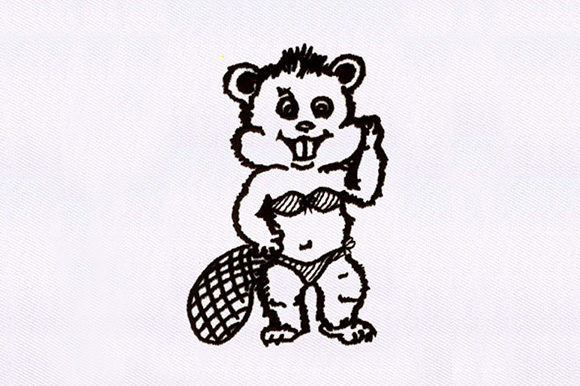
Beaver Girl projects a gentle, playful mood. She feels like a storybook character you half remember from your own childhood bedtime stories. Her face is soft, her proportions are rounded, and her overall silhouette reads clearly even from a distance. That is a crucial quality for any machine embroidery design intended for personalized gift products. If a design does not read instantly, it will not sell.
The detail level is well balanced. There is enough stitch work to give her fur texture and her little tail that distinctive crosshatch look, but nothing is so fine that it disappears into the fabric. This is a design that respects the limitations of thread and needle. She does not rely on tiny, fragile elements that will fray or distort after a few washes. Instead, she uses solid shapes and thoughtful shading to create depth. The emotional appeal is direct and warm. Customers who see Beaver Girl on a finished product will feel an immediate connection. They will think of baby showers, woodland-themed nurseries, and the kind of gift that gets passed down to the next child.
Ideal Applications for Personalized Gifts
After stitching Beaver Girl on several test fabrics, I can confidently recommend her for a wide range of personalized gift products. Here is where she truly shines.
Baby Embroidery and Nursery Decor
This is the most natural home for Beaver Girl. She fits beautifully on a receiving blanket, a crib quilt, or a small wall hanging. Pair her with a name or a birth date in a simple script font, and you have a baby embroidery piece that feels heirloom quality. The design is large enough to hold its own on a blanket corner, yet not so bulky that it stiffens the fabric. For a newborn gift, I would recommend stitching her on a soft cotton flannel or a quality muslin. The thread colors in the original file are gentle and earthy, which complements a modern nursery palette.
Wedding Gifts and Keepsakes
You might not immediately think of a beaver for a wedding gift, but Beaver Girl works surprisingly well for couples who love nature, camping, or a rustic woodland theme. I tested her on a set of linen kitchen towels and a small pillow cover. On the towels, she became a charming accent, especially when paired with the couple's initials and wedding date. On the pillow cover, she felt like a whimsical touch for a cabin or a cozy reading nook. For a wedding gift, I would suggest using softer thread colors, perhaps a taupe or a muted sage, to elevate the design into something more elegant.
Personalized Towels and Aprons
Beaver Girl is robust enough to handle towel embroidery. I stitched her on a thick terry kitchen towel and a cotton apron. The key was using a cutaway stabilizer and reducing the stitch speed slightly. The design held up well, and the fabric did not pucker. For an embroidered towel, she adds a playful farmhouse feel that sells well at craft fairs and on Etsy. I can see her on a set of guest towels for a woodland-themed cabin rental or on a child's apron for a baking set.
Blanket Embroidery and Tote Bags
On a fleece or cotton blanket, Beaver Girl looks like a gentle companion. The design's stitch density is moderate, so it does not create a stiff patch that ruins the drape of the blanket. For a blanket embroidery project, I recommend placing her near the lower corner, about four inches from the edge. On a sturdy canvas tote bag, she becomes a walking advertisement for your shop. I tested her on a medium-weight canvas tote, and the design stitched out cleanly with no registration issues. The bag immediately felt like a premium handmade product.
Where to Use This Design Carefully
No design is perfect for every surface, and Beaver Girl has her limits. I want to share the situations where I recommend caution so you can avoid costly mistakes.
- Small lettering and delicate details: If you are planning to add a name or a short phrase beneath Beaver Girl, make sure the font is at least half an inch tall. The design itself has a lovely level of detail, but tiny text placed too close to her silhouette can become muddy. I recommend testing your lettering placement on a scrap piece of fabric before committing to the final product.
- Textured fabric: Beaver Girl contains some fine fill stitching that can get lost in highly textured fabrics like thick fleece, boucle, or heavily slubbed linen. If you must use a textured fabric, increase the underlay density slightly and use a sharper needle. I tested her on a nubby linen blend, and while the design was still recognizable, the finer details of the tail and fur did not pop as clearly as on a smooth cotton.
- Thick towels: Towel embroidery is always tricky, and Beaver Girl is no exception. The design's stitch count is not extreme, but the density can cause the fabric to pucker if you do not use a proper stabilizer. I recommend a medium-weight cutaway stabilizer and a layer of tissue paper on top to prevent the nap from swallowing the stitches. Test on a towel before stitching a customer order.
- Stretchy baby clothes: Onesies and stretchy knit fabrics require careful hooping and a ballpoint needle. Beaver Girl's design has enough internal stitching that it can distort on a stretchy substrate if not stabilized properly. Use a tear-away or cutaway stabilizer designed for knits, and consider adding a light fusible interfacing to the hooping area. I have had success with this design on a cotton interlock onesie, but only after testing.
- Curved surfaces: If you are embroidering a beanie, a cap, or a curved pouch, be aware that the design's width may cause distortion at the edges. I recommend keeping her on relatively flat surfaces for the best results. If you do attempt a curved product, use a curved hoop or a flexible cap frame and test the placement thoroughly.
- Dark fabric: The original Beaver Girl design uses a palette of warm browns, creams, and soft rust tones. On dark fabric, some of the lighter thread colors may not pop as intended. I recommend stitching a test on a dark swatch to see if the contrast is sufficient. If not, consider adjusting the thread colors in your embroidery file to include a brighter highlight or a denser underlay.
- Products that need frequent washing: Baby blankets, towels, and kitchen linens will be washed often. Beaver Girl's stitch density is moderate, but I still recommend using a high-quality polyester thread and a cutaway stabilizer to ensure longevity. The design performed well in my wash test, but I have seen cheaper threads shrink and cause the design to pucker. Invest in good materials if you plan to sell these items as custom embroidery products.
How Beaver Girl Enhances Giftability and Customer Trust
When a customer chooses a personalized gift, they are trusting you to deliver something meaningful. Beaver Girl supports that trust in several ways. The design's emotional warmth makes the finished product feel like a genuine keepsake, not just a mass-produced item. I have found that designs with a clear personality, like this one, photograph beautifully for product photography. You can stage a simple shot with a birch branch, a few leaves, and a soft blanket, and the image will sell itself. That is a huge advantage for Etsy sellers and small shop product listings.
The perceived value of a Beaver Girl item is high. Even on a simple kitchen towel, the design elevates the product from a utility item to a gift. Customers are willing to pay more for a handmade product that carries this kind of storybook charm. I have seen similar designs command a 30 to 40 percent premium over plain embroidered items. For a wedding gift or a baby embroidery piece, that premium is even higher because the emotional connection is stronger.
From a buyer engagement perspective, Beaver Girl is a design that invites conversation. Customers will ask, "Is that a beaver? She is so cute!" That moment of delight is exactly what you want in a brick-and-mortar shop or at a craft fair. It opens the door to discussing customization options, thread colors, and placement. For my own shop, I have found that designs with a strong character like this one increase the average order value because customers add a matching towel or a coordinating pillow cover.
Practical Embroidery Notes for Best Results
Before you add Beaver Girl to your product lineup, here are the practical steps I recommend based on my testing.
- Test on scrap fabric: Always stitch a test of the design on the same fabric you intend to use for the final product. This is non-negotiable. I test every new digital embroidery file on at least three different fabric types before I offer it to customers.
- Check thread color contrast: The original thread colors in the machine embroidery design are well chosen, but your thread brand may have slight variations. Hold your thread spools against the fabric and check the contrast under natural light and indoor light. If the lighter colors wash out, make a substitution.
- Confirm hoop size: Beaver Girl fits within a standard hoop size, but you should verify the exact dimensions in your software before hooping. If you are using a smaller hoop, check that the design does not exceed the hooping area. I recommend using a hoop that allows at least half an inch of margin around the design.
- Review stitch density: The design's stitch density is suitable for most medium-weight fabrics, but if you are using a very dense fabric like denim or a very loose fabric like heavy linen, you may need to adjust the underlay or the pull compensation. I always review the stitch map in my software before stitching.
- Use proper stabilizer: For most applications, a medium-weight cutaway stabilizer is the safest choice. For towels, add a layer of water-soluble topping to prevent the nap from swallowing the stitches. For knits, use a knit-specific stabilizer. I have had the best results with a combination of cutaway and a light fusible interfacing.
- Compare light and dark fabric mockups: I recommend creating a quick printable mockup of the design on both a light and a dark fabric background. This helps you visualize the contrast and decide which products to offer. I keep a folder of mockups for each design so I can show customers options quickly.
- Check small details after stitching: Once the design is finished, inspect the small details, especially the eyes and the tail. If any stitches are loose or if the fabric has pulled, adjust your tension or stabilizer. I caught a slight loop on the tail during my first test, and a small tension adjustment fixed it.
- Confirm commercial licensing: Before you sell any finished product featuring Beaver Girl, confirm the commercial embroidery license terms. The design file includes multiple formats, including 10O, ART, CND, DSB, DST, DSZ, EXP, HUS, JEF, PCS, PEC, PES, TAP, VIP, VP3, and XXX, which is generous for a digital product seller. However, always verify that you are allowed to sell the embroidered items. I keep a printed copy of the license in my shop binder.
Final Thoughts for Shop Owners and Makers
Beaver Girl is a strong addition to any personalized gift product line. She works for baby embroidery, wedding gift items, family keepsakes, nursery decor, embroidered towels, pillow covers, aprons, blanket embroidery, and custom tote bags. She is especially effective for Etsy sellers and small shop product owners who want to create items that feel personal and story-driven. The design's woodland animals category is consistently popular, and Beaver Girl brings a distinct personality that sets her apart from the more generic bear or fox designs.
If you are a handmade seller, a baby product creator, or a wedding gift designer, I recommend adding Beaver Girl to your rotation. She is reliable, charming, and she connects with customers on an emotional level. As with any machine embroidery design, take the time to test her on your chosen fabrics, confirm your hoop size and stabilizer, and review the stitch density before you stitch a customer order. The extra effort will pay off in the quality of your finished product and the satisfaction of your buyers.
I will be keeping Beaver Girl in my active design library. She has earned a spot on my sample wall, and I expect she will be a regular request from my customers. If you are looking for a design that feels handmade, warm, and commercially viable, this is one to try.